English
 Deutsch
 español
 العربية
 中文
中文
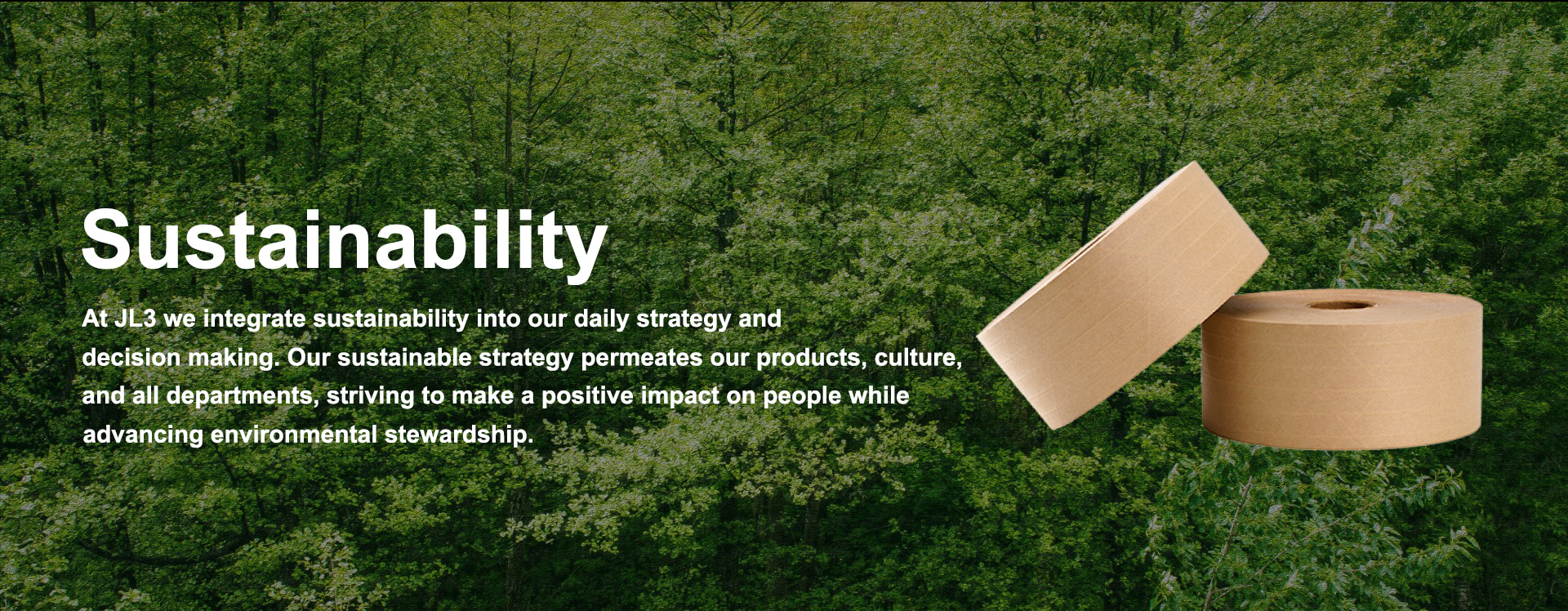
Cardboard box cracking and damage during transportation almost always originates from the adhesive tape, not the corrugated cardboard itself. This research dictates the design logic of our water-activated kraft paper tape products, with each parameter corresponding to a suitable weight failure mode, from the 126 g/m² JLN-3140 light-duty tape to the 176 g/m² KN-37120 heavy-duty tape.
Purchasing and technical personnel truly need to focus not only on whether the tape adheres, but also on what happens between the tape and the cardboard box 72 hours after sealing, in humid, low-temperature, or continuously vibrating logistics environments.
Base material basis weight is the dividing line for product performance. Our standard reinforced tape uses a double-layer kraft paper structure, with 40 g/m² on both the top and bottom sides for light and medium-duty tapes, while the heavy-duty KN-37120 increases this to 70 g/m² on the bottom side. This 30 g/m² difference is not merely an increase in thickness. The bottom basis weight directly determines the depth to which the starch adhesive can penetrate the fibers of the corrugated paper surface. Insufficient grammage results in shallow adhesive penetration, relying primarily on surface contact area for bonding. Under pressure during stacking or lateral impact during pallet transport, shallowly penetrated adhesive surfaces will peel off completely, while deeply penetrated surfaces will experience fiber tearing. Fiber tearing indicates that the tape and carton have formed a unified structure, which is the expected failure mode for water-activated kraft paper sealing tape.
Our water-activated tape uses starch adhesive. Starch adhesive operates on a completely different principle from the pressure-sensitive chemical adhesive on BOPP tape. Starch adhesive requires water activation and gelatinization before penetrating between the cellulose fibers on the corrugated paper surface, forming a fiber bond after curing. This cured fiber bond is irreversible; tearing the tape will inevitably damage the carton surface. For e-commerce return processes or shipping high-value electronic products, this tamper-proof feature is essential, not just a marketing gimmick. All products can be printed with brand logos, enhancing brand image and eliminating the need for secondary labeling.
Strengthened structure is a parameter most easily overlooked when comparing specifications.
The glass fiber reinforced type uses a biaxial layout. The longitudinal direction uses G110 or G75 continuous fiberglass yarn, spaced 72 mm apart. The transverse direction uses G150 yarn, spaced 1.1 inches apart, laid at a 45-degree angle. JLN-3150 has five yarns in the longitudinal direction (1-1-1-1-1) and three yarns in the transverse direction (1-1-1). KN-37120 has a denser longitudinal direction (2-2-2-2-2-2) and four yarns in the transverse direction (1-1-1-1). The extra yarn directly corresponds to the continuous tensile load that heavy-duty cartons withstand after sealing. This reinforcement density is crucial for applications like furniture, appliances, and industrial parts, where the contents are heavy and exert a constant tensile force on the sealing surface. The total thickness ranges from 0.14 mm for light-duty cartons to 0.19 mm for heavy-duty cartons; the extra 0.05 mm is almost entirely the mass of the reinforcing yarn, not adhesive or substrate filler.
For customers with strict requirements for eliminating plasticized packaging, JLN-3150E and KN-37120E use 300D and 600D plant-based yarns instead of fiberglass. The tensile strength is slightly lower than the fiberglass version, but the substrate, adhesive layer, and reinforcement layer are all compostable.
The recycled paper versions, JLN-3150R and KN-37120R, use 100% recycled kraft paper fibers on both sides, while maintaining the same fiberglass reinforcement mesh. These two lines are not downgraded products but targeted engineering solutions for end-customers' sustainability audit requirements, and the price can be slightly lower than virgin paper.
Regarding supporting equipment, the KN-366Hi electric water-activated tape dispenser has a single roll capacity of 1400 feet, significantly reducing the roll change frequency of the high-frequency sealing line. The iSense sensor for tape dispensing and millimeter-level length presets eliminate the need for operators to estimate length by feel. The wasted tape in the water-activated system not only incurs material costs, but also leaves wet adhesive residue in the machine's pathways, requiring downtime for cleaning. When evaluating packaging projects, water-activated kraft paper tape is superior to BOPP tape, and this is not just in one aspect. It requires comprehensive consideration by the purchasing personnel.




 IPv6-Netzwerk wird unterstützt