English
 Deutsch
 español
 العربية
 中文
中文
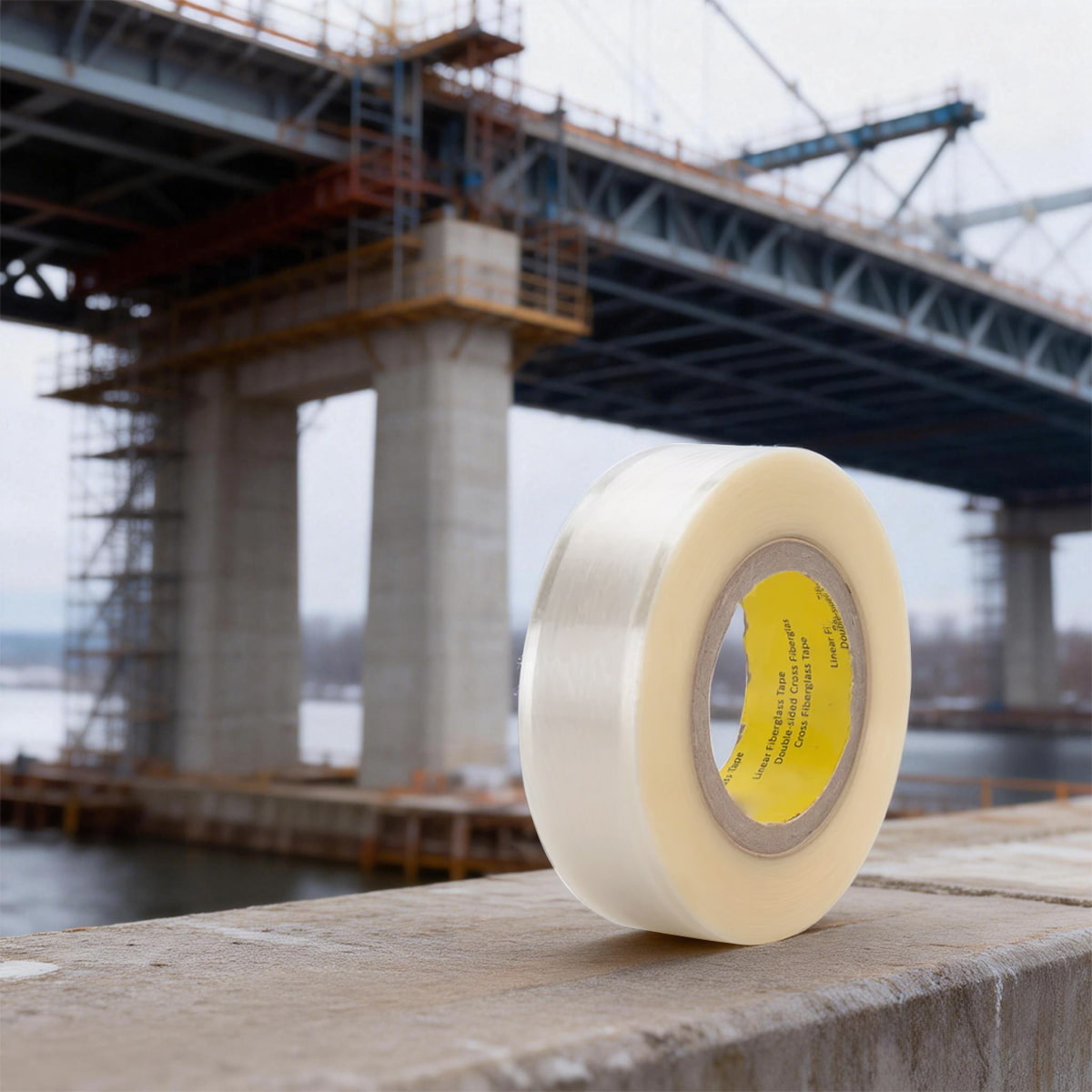
Wer in der Verpackungsindustrie arbeitet, sieht in diesem Bild vielleicht einfach eine Rolle Schwerlastklebeband. Doch für uns im Infrastruktur- und Schwermaschinenbau ist das JLT-5160 ein Spezialwerkzeug für ein spezielles Problem: Wie hält man massive, sich bewegende Lasten sicher, ohne dass sie reißen? Beim Bündeln von Stahlseilen für eine Hängebrücke oder beim Sichern von Spannbetonformen versagt herkömmliches Glasfaserklebeband oft. Nicht, weil es nicht stark genug wäre, sondern weil es zu spröde ist. Es gibt nicht nach.
Das JLT-5160 ist anders. Obwohl es zu unserer Kategorie der Filamentklebebänder gehört, wurde es speziell für Einsatzbereiche wie die im Bild gezeigte Brückenbaustelle entwickelt. Entscheidend ist hier nicht nur die Zugfestigkeit, sondern vor allem die Stoßdämpfung. In solchen Umgebungen dehnen sich die Materialien aus, ziehen sich zusammen und vibrieren. Ein starres, undehnbares Klebeband würde unter dieser dynamischen Belastung reißen. Dieses Klebeband ist mit einer speziellen Faserverstärkung ausgestattet – häufig unter Verwendung von Hochleistungs-Chemiefasern oder modifizierten Glasfasermischungen –, die eine deutlich höhere Bruchdehnung (ca. 25–28 %) im Vergleich zu den üblichen 3–5 % bei herkömmlichen Verpackungsklebebändern ermöglicht.
Man kann es sich wie einen Stoßdämpfer im Vergleich zu einer Stahlstange vorstellen. Wenn sich ein schweres Stahlbündel beim Transport zur Baustelle verschiebt, dehnt sich das JLT-5160 leicht, um die kinetische Energie abzufangen und hält dann fest. Es reißt nicht. Die PET-Trägerschicht ist hier auch deutlich dicker, üblicherweise um die 7,8 Mil, da sie dem Abrieb auf rauem Beton und rostigen Stahloberflächen widerstehen muss. In der Praxis sehen wir dieses Band oft anstelle von Stahlbändern, weil es nicht rostet, das Material nicht beschädigt und schlichtweg sicherer für die Arbeiter zu schneiden und zu entfernen ist, ohne sich an reißenden Metallbändern verletzen zu müssen.
Wenn also JLT-5160 für ein Projekt angegeben wird, liegt das nicht daran, dass ein „Aufkleber“ benötigt wurde. Vielmehr wurde ein flexibles, hochfestes Rückhaltesystem benötigt, das eher einem Sicherheitsgurt als einem herkömmlichen Befestigungselement ähnelt. Es geht darum, tonnenweise Stahl und Beton genau dort zu halten, wo sie hingehören, bis die endgültigen Befestigungselemente montiert sind.




 IPv6-Netzwerk wird unterstützt